

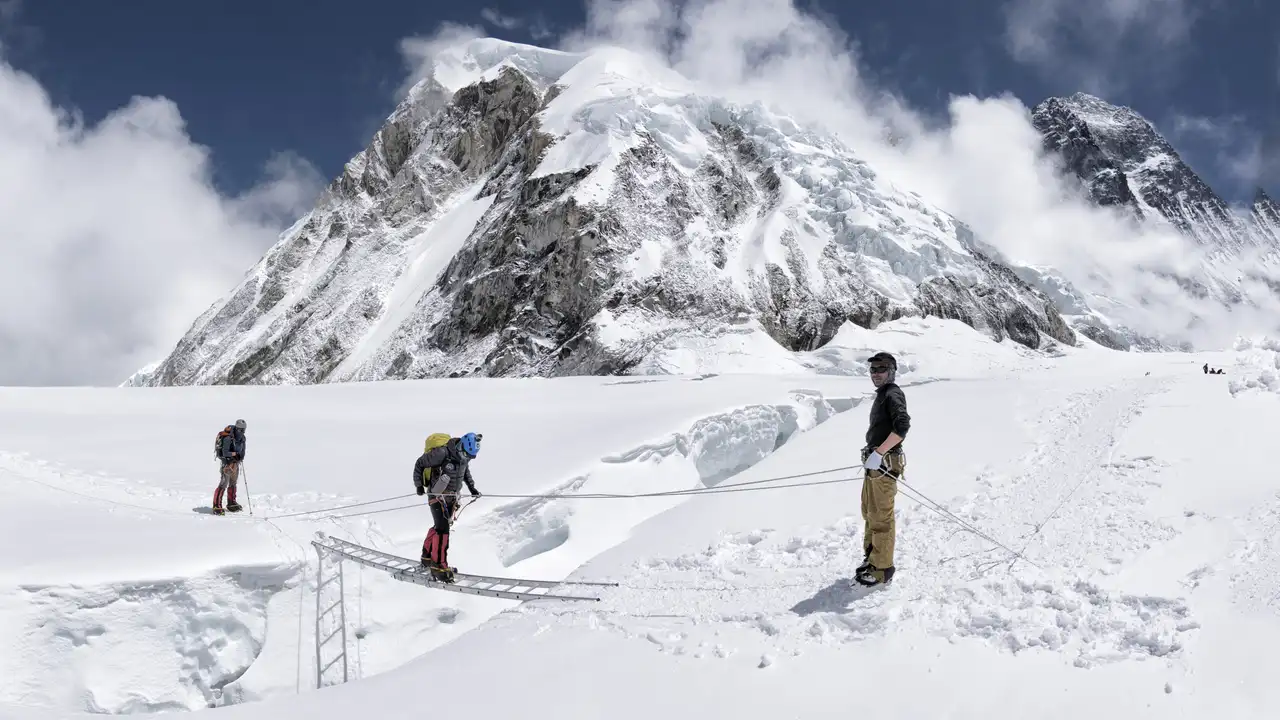
The dream of standing on the roof of the world is a calling that transcends mere sport. It is a financial, physical, and logistical undertaking of the highest order. As we approach the 2025 climbing season, the landscape of Mount Everest expeditions has shifted dramatically. With the Government of Nepal implementing significant permit fee hikes and stricter experience requirements, the financial barrier to entry has risen.
- The 2025 Financial Landscape: Why Costs Are Soaring
- 1. Mandatory Government Fees and Permits (The Fixed Costs)
- 2. High-Altitude Travel Insurance and Rescue Coverage
- 3. Expedition Operator Tiers: What You Get for Your Money
- Tier 1: Nepali Operator (Sherpa Supported)
- Tier 2: Western Operator (Guided)
- Tier 3: Luxury and “Flash” Expeditions
- 4. Equipment and Gear Costs: The Price of Survival
- Personal Clothing System (~$5,000 – $8,000)
- Technical Gear (~$3,000)
- Technology and Communication (~$2,000)
- Oxygen Systems
- 5. Travel and Logistics: Getting to Base Camp
- 6. Staff Wages, Tips, and Bonuses
- 7. Pre-Expedition Training and Preparation
- 8. Live Daily Information: The 2025 Itinerary Structure
- Phase 1: Arrival and Approach (Days 1-10)
- Phase 2: Rotations and Acclimatization (Days 11-35)
- Phase 3: The Summit Push (Days 36-55)
- Phase 4: Departure (Days 56-60)
- 9. Hidden Financial Risks and Contingencies
- 10. Tibet (North Side) vs. Nepal (South Side): A 2025 Cost Comparison
- 11. Conclusion: Is the Price Tag Justified?
If you are planning a summit bid for Spring 2025 or looking ahead to 2026, understanding where every dollar goes is critical. This guide is not just a price list; it is a strategic blueprint for funding, insuring, and executing a successful expedition in the modern era of high-altitude mountaineering.
The 2025 Financial Landscape: Why Costs Are Soaring
The headline news for the 2025 season is the substantial increase in government royalty fees. However, that is only the tip of the iceberg. Inflation in global travel, increased insurance premiums for high-risk activities, and the rising cost of labor in the Khumbu region have all contributed to a higher bottom line.
A standard, safe, and well-supported climb in 2025 will now range from $55,000 to $85,000. Luxury expeditions, offering western guides and premium base camp amenities, can easily surpass $160,000.
Below is a granular analysis of these costs, designed to help you budget for what may be the most expensive purchase of your life outside of a home.
1. Mandatory Government Fees and Permits (The Fixed Costs)
You cannot step foot on the mountain without satisfying the regulatory requirements. These are non-negotiable and must be paid in advance.
The Nepal Permit Price Hike
Effective for the 2025 season, the Nepal Ministry of Tourism has raised the Everest climbing permit fee for foreign climbers.
- Spring 2025 Permit: $15,000 USD (increased from $11,000).
- Autumn 2025 Permit: $7,500 USD.
This $4,000 increase is intended to manage overcrowding and fund better waste management systems on the glacier.
Additional Regulatory Fees
- Liaison Officer (LO): Every team must have a government Liaison Officer. The cost is roughly $3,000 per team, usually split among climbers. Expect to pay $300 to $500 as your share.
- Khumbu Icefall Route Fee: The Sagarmatha Pollution Control Committee (SPCC) manages the “Icefall Doctors” who set the ladders and ropes. The fee is approximately $600 per climber.
- Garbage Deposit: A refundable deposit of $4,000 per team is required. You must retrieve your waste to get this back.
- Sagarmatha National Park Entry: Approximately $30.
- TIMS Card (Trekkers’ Information Management System): Approximately $20.
The “7,000 Meter Rule”
New for 2025 is the strict enforcement of the experience mandate. Climbers applying for an Everest permit must now provide proof of having summited a peak of at least 7,000 meters (22,965 feet) in Nepal.
- Cost Implication: If you have not yet climbed a 7,000m peak, you must budget for a preparatory expedition. Popular options like Himlung Himal or Baruntse will cost between $8,000 and $15,000 including permits and logistics. This is effectively a hidden “prerequisite cost” for Everest 2025.
2. High-Altitude Travel Insurance and Rescue Coverage
This is the single most critical financial safety net for any climber. Standard travel insurance is worthless above 6,000 meters. You require a specialized policy that explicitly covers technical mountaineering and helicopter evacuation up to 8,848 meters.
The Cost of Rescue
Helicopter rescues in the Everest region are privatized and expensive. A rescue from Camp 2 (6,400m) can cost upwards of $10,000 to $20,000 payable immediately. Hospitals in Kathmandu often require guarantee of payment before admission.
Recommended Coverage Types
- Medical Evacuation (Medevac): Look for policies with a minimum of $500,000 in evacuation coverage. This ensures that if a long-line rescue is needed, the bill is covered.
- Medical Expenses: A minimum of $50,000 is recommended for treatment of High Altitude Pulmonary Edema (HAPE), High Altitude Cerebral Edema (HACE), or frostbite.
- Trip Cancellation: With expeditions costing over $60,000, investing in “Cancel For Any Reason” (CFAR) upgrades can protect your deposit if you are injured during training.
Premium Estimation
Expect to pay between $700 and $3,500 for your insurance package depending on your age, country of residence, and coverage limits. Companies like Global Rescue, Ripcord, and World Nomads (Explorer Plan) are frequently cited, but always read the Policy Wording document carefully for altitude exclusions.
3. Expedition Operator Tiers: What You Get for Your Money
The gap between a $45,000 climb and a $100,000 climb is not just about comfort; it is about risk management, redundancy, and success rates.
Tier 1: Nepali Operator (Sherpa Supported)
- Cost: $45,000 – $55,000
- Inclusions: Local logistics, base camp food, group gear, 1:1 Sherpa support.
- Pros: Lower cost, supports local economy directly.
- Cons: Communication barriers, variable oxygen quality, often less medical support at Base Camp.
Tier 2: Western Operator (Guided)
- Cost: $65,000 – $85,000
- Inclusions: Western expedition leader, high-quality weather forecasting (key for summit windows), premium oxygen systems (Summit Oxygen or similar), higher Sherpa ratios.
- Pros: High safety standards, detailed logistics management, better food.
Tier 3: Luxury and “Flash” Expeditions
- Cost: $100,000 – $200,000+
- Inclusions: Hypoxic pre-acclimatization (shortening the trip to 3-4 weeks), unlimited oxygen, private heated tents with heavy mattresses, western chefs, personal photographer options, 2:1 Sherpa support.
- Pros: Maximum comfort, highest chance of summit, minimal time away from work.
4. Equipment and Gear Costs: The Price of Survival
Your gear is your life support. Do not buy cheap knock-offs. The 2025 season demands the latest in thermal technology.
Personal Clothing System (~$5,000 – $8,000)
- Down Suit: The 8,000-meter suit is mandatory. Brands like Mountain Hardwear, Rab, or Marmot cost $1,000 to $1,500.
- Boots: You need triple boots (Olympus Mons or Phantom 8000). Cost: $1,000 – $1,300.
- Gloves/Mittens: Heated gloves are becoming standard. Budget $400.
Technical Gear (~$3,000)
- Crampons & Ice Axe: Steel crampons for durability. $200.
- Harness & Carabiners: Lightweight alpine harness. $150.
- Ascender (Jumar): Critical for fixed lines. $100.
Technology and Communication (~$2,000)
- Satellite Phone/Device: A Garmin inReach or Zoleo for texting. Subscription plus device: $500.
- Solar Charging: Portable panels and power banks (Anker or Goal Zero) to keep boot heaters and phones alive. $300.
- Photography: GoPro or lightweight mirrorless cameras specialized for cold weather.
Oxygen Systems
Most operators include a set number of bottles (usually 5 to 7).
- Extra Oxygen: If you want a higher flow rate (4 liters/minute) for safety, budget $600 per extra bottle.
- Mask and Regulator: High-end Summit Oxygen mask kits cost $1,000+ if purchased, though usually rented/included.
5. Travel and Logistics: Getting to Base Camp
The journey to the mountain is an adventure in itself and carries its own costs.
International Flights
Business class flights to Kathmandu (KTM) allow for extra baggage allowance, which is vital for hauling 60kg of gear.
- Economy: $1,500 – $2,500.
- Business: $4,000 – $8,000.
The Lukla Flight
The flight to Tenzing-Hillary Airport in Lukla is weather-dependent.
- Plane Ticket: $400 – $500 round trip.
- Helicopter Upgrade: Many climbers opt to helicopter into Namche or Lukla to avoid delays. Cost: $500 – $1,000 per person (shared charter).
Trekking Expenses
While your agency covers the trek, you will want extra cash for:
- Wi-Fi (Everest Link): ~$50 for 10GB.
- Hot Showers: $5 – $10 per shower in tea houses.
- Charging Electronics: $5 – $10 per hour.
- Cappuccinos/Bakeries: Yes, these exist in Namche and Dingboche. Budget $200 for “comfort food” on the approach.
6. Staff Wages, Tips, and Bonuses
It is customary and expected to tip your support team. This is often paid in US Dollars (new, crisp $100 bills) at Base Camp after the climb.
- Summit Sherpa Bonus: $1,500 – $2,500. This is a “non-optional” bonus if you summit.
- Climbing Sherpa Tip: Even if you don’t summit, you tip for their work carrying loads. $1,000.
- Kitchen Staff: Pooled tip from the team. Budget $200 – $300.
- Western Guide Tip: Usually 10-15% of the expedition fee if you hired a private guide.
7. Pre-Expedition Training and Preparation
You cannot train for Everest by jogging. You need specific mountaineering conditioning.
- Mountaineering Courses: A 10-day technical course (e.g., in the Alps, Cascades, or Scotland). $2,500 – $4,000.
- Personal Trainer: 6-12 months of coaching. $200/month.
- Hypoxic Generators: Renting an altitude tent to sleep in at home before departure. $150/week.
8. Live Daily Information: The 2025 Itinerary Structure
While every expedition varies based on weather and acclimatization, this is the standard flow for a South Side (Nepal) expedition. Use this to plan your logistics and time off work.
Phase 1: Arrival and Approach (Days 1-10)
- Day 1: Arrival in Kathmandu. Gear checks, briefing at the Ministry of Tourism.
- Day 2: Final prep. Last minute purchases in Thamel.
- Day 3: Fly to Lukla (2,860m). Trek to Phakding.
- Day 4: Trek to Namche Bazaar (3,440m). The first steep incline.
- Day 5: Acclimatization in Namche. Hike to Everest View Hotel.
- Day 6: Trek to Tengboche (3,860m). Visit the monastery.
- Day 7: Trek to Dingboche (4,410m).
- Day 8: Acclimatization in Dingboche. Hike Nangkartshang Peak.
- Day 9: Trek to Lobuche (4,910m).
- Day 10: Trek to Everest Base Camp (5,364m). Move into your tent.
Phase 2: Rotations and Acclimatization (Days 11-35)
- Days 11-15: Skills training in the lower Khumbu Icefall. Ladder practice. Puja ceremony (blessing of the gear).
- Rotation 1: Climb to Camp 1 (6,000m) and Camp 2 (6,400m). Spend 3-4 nights. This is the first test of the Western Cwm.
- Rest: Return to Base Camp for 4-5 days of recovery.
- Rotation 2: Climb to Camp 2, touch Camp 3 (7,200m) on the Lhotse Face. Sleep on oxygen if using a luxury profile, or sleep without for acclimatization.
- Rest: Descend to Base Camp. Many teams now fly via helicopter to Namche or even Kathmandu for “thick air” recovery (3-4 days). Note: This adds $2,000+ to costs.
Phase 3: The Summit Push (Days 36-55)
- Waiting Game: Waiting for the jet stream to move away.
- Day X: Climb to Camp 2 directly.
- Day X+1: Rest at Camp 2.
- Day X+2: Climb to Camp 3 (7,200m). Start breathing supplementary oxygen.
- Day X+3: Climb to South Col / Camp 4 (7,950m). Enter the Death Zone. Rest for a few hours.
- Summit Night: Depart Camp 4 around 8:00 PM.
- Summit Morning: Reach the summit (8,848m) between 5:00 AM and 9:00 AM.
- Descent: Immediately descend to Camp 2. It is too dangerous to sleep at Camp 4 after summiting.
Phase 4: Departure (Days 56-60)
- Clean Up: Pack up Base Camp. Retrieve trash deposit.
- Trek/Fly Out: Helicopter to Lukla/Kathmandu is common now to save knees.
- Celebration: Dinner in Kathmandu. International flight home.
9. Hidden Financial Risks and Contingencies
Smart financial planning for high-altitude expeditions requires a contingency fund.
The “Summit Window” Extension
If the weather is bad and the expedition extends beyond the scheduled date, you may need to pay for:
- Extra Hotel Nights: In Kathmandu.
- Flight Changes: Rebooking fees for international travel.
- Staff Wages: Extended daily wages for support staff.
Medical Contingencies
If you get sick (Khumbu Cough, GI issues) and need to descend to a lower village for a few days, you pay for the lodge and food out of pocket.
Gear Replacement
Crampons break. Down suits get torn. Having a $1,500 emergency fund accessible via credit card or cash is essential.
10. Tibet (North Side) vs. Nepal (South Side): A 2025 Cost Comparison
The North Side (China/Tibet) was closed to foreigners for several years but has reopened. How does it compare in 2025?
- Nepal (South):
- Cost: $55k – $85k (Mid-range).
- Pros: Helicopter rescue is available (huge safety factor). Freedom of movement in Base Camp.
- Cons: The Khumbu Icefall is objective danger. More crowded.
- Tibet (North):
- Cost: Similar, perhaps slightly higher due to visa and complex logistics ($60k – $90k).
- Pros: You can drive all the way to Base Camp. No Khumbu Icefall. Generally safer route.
- Cons: NO helicopter rescue. If you get sick high up, you must be carried down. Politics can close the mountain without notice. Visa processing for China is currently rigorous.
11. Conclusion: Is the Price Tag Justified?
Climbing Mount Everest in 2025 is a six-figure investment. When you combine the permit ($15,000), the operator fee ($60,000 average), gear ($10,000), travel ($5,000), and insurance/tips ($5,000), the total lands around $95,000.
However, for those who seek the ultimate test of human endurance, the cost is secondary to safety and success. The trend for 2025 is clear: regulators are pushing for quality over quantity. The price hikes and experience requirements are designed to filter the mountain, potentially making it a safer, albeit more exclusive, arena.
If you are prepared to commit the funds, ensure you are equally prepared to commit the physical effort. Everest does not care how much you paid; it only respects your preparation.
Strategic Next Steps for Aspirants
- Secure Funding: Explore personal financing or sponsorship early.
- Book Insurance: Compare Global Rescue vs. Ripcord immediately upon booking your trip.
- Validate Experience: Ensure your 7,000m peak certificate is in order for the permit application.
See you in the Khumbu.