

Today’s Market Pulse: The Daily Business Travel Briefing
- Riyadh Air Update: The newest luxury carrier has just confirmed the rollout of 4K OLED screens in Business Elite cabins, setting a new standard for in-flight productivity and entertainment integration.
- Policy Shift Alert: A recent survey from late 2024 indicates that 67% of Global 500 companies have now formally adopted “split-billing” protocols to automate the separation of business and leisure expenses.
- Visa News: Thailand and Japan have expanded their digital nomad visa quotas this week, specifically targeting high-net-worth executive travelers who wish to extend business trips for up to six months.
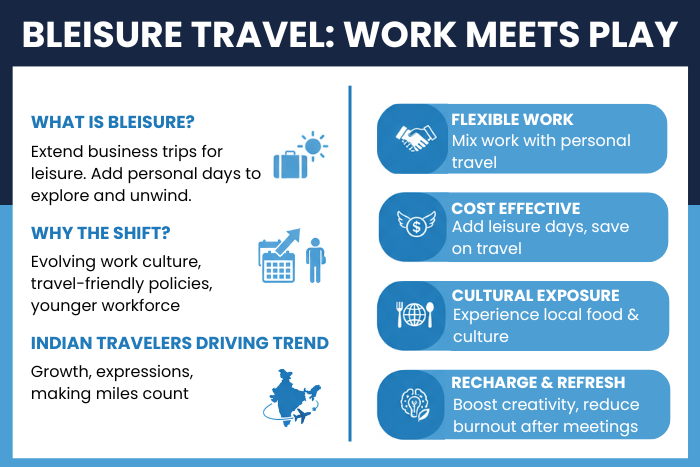
The landscape of corporate mobility is undergoing a seismic shift. We are no longer looking at a simple return to travel but a complete reimaging of why and how we move. The term “bleisure”—the blending of business and leisure travel—has graduated from a buzzword to a critical component of employee retention and corporate strategy. For financial officers, travel managers, and HR directors, this evolution presents both a massive opportunity and a complex challenge. The focus has moved beyond simple cost-savings to value generation, risk mitigation, and leveraging high-end tools to manage a dispersed workforce.
- The Financial Backbone: Corporate Credit Cards and AI Expense Management
- Virtual Corporate Cards and Real-Time Controls
- The Rise of Automated Expense Management Software
- Strategic Keyword Focus for Finance Teams
- Insurance and Duty of Care: Closing the Coverage Gap
- The Luxury of Efficiency: Business Class and Premium Travel
- Policy Revolutions: Remote Work and Digital Nomad Visas
- High-End Retreats: The New Boardroom
- Conclusion: The Era of Strategic Mobility
- FAQ: Navigating the 2025 Travel Landscape
- What is the biggest risk in bleisure travel?
- How are companies handling expense splits?
- Are digital nomad visas viable for full-time employees?
- Is business class travel increasing?
- What is the average cost of a corporate retreat in 2025?
- Which credit cards are best for corporate travel?
- Can AI replace travel agents?
- What is “Proximity Power”?
- How does sustainability fit into 2025 travel policies?
- What are “Bespoke Bundles”?
This comprehensive guide explores how forward-thinking organizations are rewriting their travel policies in 2025. We will deep-dive into the financial instruments, insurance gaps, luxury aviation innovations, and compliance frameworks that are defining this new era.
The Financial Backbone: Corporate Credit Cards and AI Expense Management
The most significant friction point in bleisure travel has always been the wallet. Who pays for what? When does the company card go back in the pocket, and when does the personal card come out? In 2025, technology has rendered these questions obsolete through sophisticated financial tools.
Virtual Corporate Cards and Real-Time Controls
The physical plastic card is rapidly being supplemented by virtual corporate credit card solutions. These digital-first financial instruments allow companies to issue time-bound and budget-capped virtual cards for specific trips.
Dynamic Spending Limits: Modern platforms now allow finance teams to set “smart limits” that adjust based on the traveler’s location and role. For a bleisure trip, a card can be programmed to stop functioning for business expenses at 6:00 PM on Friday, ensuring that the weekend stay at the luxury resort is billed directly to the employee’s personal method of payment.
High-Yield Corporate Rewards: Companies are increasingly scrutinizing the rewards structures of their corporate card programs. With travel volumes rebounding, the points accrued on business class flights and five-star hotel stays are significant. Smart organizations are using these enterprise-level rewards to offset the cost of software subscriptions or to fund internal corporate retreats.
The Rise of Automated Expense Management Software
Manual expense reporting is dead. The latest generation of expense management software utilizes “Agentic AI” to proactively manage the split between business and leisure.
- Automated Split-Billing: Leading platforms now integrate directly with hotel property management systems. When a traveler checks out after a combined business-leisure stay, the software automatically identifies the “leisure” nights based on the dates logged in the travel booking tool. It then splits the folio, sending the business portion to the corporate account and the personal portion to the employee’s linked personal card.
- AI-Driven Audit Trails: For high-volume travel programs, human audit is impossible. AI tools now scan thousands of receipts in seconds, flagging anomalies like a “client dinner” that occurred on a Saturday night or a spa treatment buried in a hotel bill. This level of scrutiny ensures compliance without burdening the finance team.
Strategic Keyword Focus for Finance Teams
If you are upgrading your financial stack, focus on solutions that offer “integrated travel and expense management” and “multi-currency corporate cards.” The ability to handle cross-border transaction fees and provide real-time foreign exchange data is crucial for global teams.
Insurance and Duty of Care: Closing the Coverage Gap
One of the most dangerous misconceptions in the bleisure trend is assuming that a standard business travel accident insurance policy covers the employee during their leisure days. It often does not. This “coverage gap” is a major liability risk that companies are rushing to close in 2025.
High-Limit Business Travel Accident Insurance
Standard policies are often insufficient for the modern executive traveler. We are seeing a surge in demand for high-limit business travel accident insurance that offers principal sums exceeding ten times the annual salary.
24/7 Leisure Extension: The most robust policies now include specific endorsements that extend “Duty of Care” coverage to the leisure portion of the trip. This means that if an employee is injured while hiking in the Swiss Alps two days after their conference in Zurich ends, the company’s medical evacuation insurance still applies.
Medical Evacuation and Repatriation: In a post-pandemic world, the cost of medical transport has skyrocketed. A private air ambulance from Asia to the US can cost over $150,000. Comprehensive corporate policies must include uncapped medical evacuation coverage. This is non-negotiable for protecting high-value talent.
Digital Nomad Insurance Solutions
For employees utilizing “work from anywhere” policies, standard travel insurance is inadequate because it usually requires a return date. New “global mobility insurance” products are entering the market. These act as a hybrid between travel insurance and international health insurance, providing long-term medical coverage, routine check-ups, and dental care for employees who may be on the road for months at a time.
Key Policy Update: Your travel policy must explicitly state the duration of coverage. If an employee extends a trip beyond seven days for personal reasons, does the company insurance terminate? Clear communication here prevents catastrophic financial loss for both the employee and the employer.
The Luxury of Efficiency: Business Class and Premium Travel
The argument for economy class travel for long-haul business trips is losing weight. The productivity cost of a fatigued executive far outweighs the price difference of a business class ticket. In 2025, the front of the plane is not just about champagne; it is about office-grade connectivity and privacy.
The New Standard in Cabin Innovation
Airlines are investing billions to turn business class seats into flying boardrooms.
- Cathay Pacific’s Aria Suite: Recently debuting on their Boeing 777-300ER fleet, this suite features a sliding privacy door and a 24-inch 4K screen. The focus here is on total isolation, allowing confidential work to be done without fear of prying eyes.
- Qatar Airways Qsuite Next Gen: The Qsuite continues to dominate, but the latest iteration allows for even more collaborative configurations. Quad-seating options enable teams to hold face-to-face meetings at 35,000 feet.
- Riyadh Air’s Digital Integration: The newcomer Riyadh Air is setting benchmarks with seamless digital integration, allowing passengers to pair their devices instantly and control their suite environment via their own smartphones.
Connectivity as a Commodity
The most critical amenity for 2025 is not the lie-flat bed; it is the Wi-Fi. Carriers like British Airways and United are rolling out Starlink and other low-earth orbit satellite services. This provides low-latency, high-speed internet capable of supporting Zoom calls and large file transfers.
Policy Tip: Update your travel policy to reimburse “high-speed in-flight Wi-Fi” automatically. It is a small cost that unlocks hours of billable work.
Premium Economy as the New Baseline
For junior staff or shorter international hauls, Premium Economy is becoming the mandated minimum. It offers the power ports and workspace necessary for laptop use, which are often impossible to use effectively in standard economy.
Policy Revolutions: Remote Work and Digital Nomad Visas
The legal landscape of bleisure is shifting rapidly. Governments are competing for talent, and companies are caught in the middle of tax and immigration complexities.
The “Tethered Nomad” Model
Pure digital nomadism—where an employee has no home base—is rare in the corporate world. Instead, we are seeing “tethered nomadism.” This policy allows employees to work remotely from a specific list of approved countries for a set period (e.g., 90 days per year).
Why Approved Lists? Corporate tax liability. If an employee spends more than 183 days in a country, they may inadvertently create a “permanent establishment” for their employer, triggering corporate tax obligations in that jurisdiction. Smart policies restrict travel to countries with favorable tax treaties or specific digital nomad visa programs.
Navigating Digital Nomad Visas
Over 70 countries now offer these visas. For 2025, the application processes have been streamlined, but the income requirements have risen.
- Income Verification: Countries like Spain and the UAE now require proof of sustained high income, often verified by the employer. HR departments must be prepared to provide these “remote work authorization letters” instantly.
- Social Security Compliance: A major policy update for 2025 involves “Certificate of Coverage” acquisition. This ensures that the employee continues to pay social security in their home country and is exempt from double taxation in the host country.
High-End Retreats: The New Boardroom
As remote work disperses teams, the “corporate retreat” has replaced the daily office interaction. These are not cheap team-building days; they are high-investment, high-ROI events.
The Shift to Luxury Venues
Budget hotels are out. Companies are booking exclusive-use luxury villas, castles, and high-end boutique resorts. The average budget for these retreats has climbed to over $700 per person per night.
Why Luxury? When you bring a team together only once or twice a year, the environment must signal value. It is a retention tool. Venues in destinations like Costa Rica, Tuscany, and the Rockies are seeing massive corporate demand.
All-Inclusive for Corporations: Brands like Marriott and Royalton are launching “corporate all-inclusive” packages. These are not the crowded buffets of the past but curated experiences with private meeting spaces, dedicated culinary teams, and high-speed secure networks dedicated to the group.
Strategic Planning for Offsites
Successful retreats in 2025 require:
- Dedicated Logistics Partners: specialized agencies that handle everything from charter flights to dietary restrictions.
- Tech-Enabled Meeting Spaces: The venue must have enterprise-grade video conferencing facilities to beam in key stakeholders who could not travel.
- Structured Downtime: Bleisure principles apply here too. The itinerary must include significant blocks of leisure time for organic bonding.
Conclusion: The Era of Strategic Mobility
The trends of late 2024 and 2025 paint a clear picture. Travel is no longer a commodity to be purchased at the lowest price. It is a strategic lever for growth. The companies that will win the talent war are those that view travel policies not as a rulebook of restrictions, but as a menu of opportunities.
They are investing in business travel accident insurance that covers the whole person, not just the worker. They are deploying corporate travel management software that removes friction. They are utilizing luxury business class flights to ensure their teams arrive ready to perform. And they are using corporate credit card rewards to fund it all smartly.
Update your policies. Close the insurance gaps. Embrace the bleed between business and leisure. The future of work is not just about where you sit; it is about how well you move.
FAQ: Navigating the 2025 Travel Landscape
What is the biggest risk in bleisure travel?
The “Duty of Care” gap. Ensuring your corporate insurance covers employees during the leisure portion of their trip is critical to avoiding liability.
How are companies handling expense splits?
Automated expense management software is the standard. It uses AI to split hotel folios and transport costs based on the date and nature of the expense, ensuring strict compliance.
Are digital nomad visas viable for full-time employees?
Yes, but with “Tethered Nomad” policies. Companies restrict locations to ensure they do not trigger accidental corporate tax liabilities in foreign jurisdictions.
Is business class travel increasing?
Despite economic fluctuations, business class bookings are holding steady or rising for long-haul routes, driven by the need for privacy, productivity, and the “premiumization” of corporate travel as a perk.
What is the average cost of a corporate retreat in 2025?
For high-end strategic offsites, budget between $500 and $1,000 per person per day, inclusive of accommodation, activities, and logistics.
Which credit cards are best for corporate travel?
Look for cards that offer “liability waiver protection,” integration with your specific expense software (like SAP Concur or Expensify), and high point multipliers on travel categories.
Can AI replace travel agents?
Not entirely. While “Agentic AI” handles booking and changes, human agents are still preferred for complex VIP itineraries and emergency crisis management.
What is “Proximity Power”?
This is the trend of prioritizing regional and domestic travel using high-speed rail or short-haul flights to maintain frequent face-to-face contact with key clients and teams, minimizing downtime.
How does sustainability fit into 2025 travel policies?
It is no longer optional. “Carbon budgets” are being assigned alongside financial budgets. Departments must choose travel options that fit within their emissions cap, often favoring rail over air for trips under four hours.
What are “Bespoke Bundles”?
Airlines are now offering corporate clients customized fare bundles that might include Wi-Fi, lounge access, and unlimited changes for a single negotiated price, moving away from static discounts.