

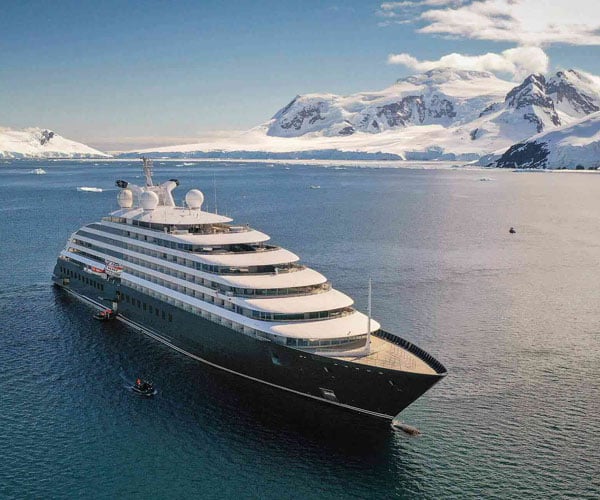
The White Continent remains the ultimate frontier for the modern traveler. It is a destination that demands respect, preparation, and the right vessel. When you commit to a journey south of the Antarctic Circle, the ship you choose is not merely transportation. It is your sanctuary against the elements, your viewing platform for the world’s most dramatic wildlife, and your home for two weeks of life-altering exploration.
- Current Antarctica Travel Update: December 7, 2025
- Why a Balcony Suite is Essential for Antarctica
- 1. Scenic Eclipse I & II: The World’s First Discovery Yachts
- 2. Silversea Endeavour: The Ultra-Luxury Specialist
- 3. Viking Octantis & Viking Polaris: The Thinking Person’s Expedition
- 4. Quark Ultramarine: The Adventure Beast
- 5. Seabourn Venture & Pursuit: Ultra-Luxury Meets Hard Expedition
- 6. Aurora Expeditions’ Sylvia Earle: The Stable Choice
- Detailed Cost Analysis and Booking Advice
- The Daily Routine of a Luxury Expedition
- Packing for Luxury and Performance
- Health and Safety Considerations
- Conclusion: The Investment in a Lifetime Memory
- Frequently Asked Questions
For the discerning traveler, a balcony suite is not a luxury. It is a necessity. The ability to step outside your cabin at 3 AM to witness the sun kissing the jagged peaks of the Lemaire Channel, or to watch a pod of humpback whales bubble-net feeding alongside the ship while you sip your morning espresso, transforms the experience from a tour into an immersion.
This comprehensive guide details the absolute pinnacle of polar luxury. We explore the finest expedition ships currently sailing the Southern Ocean, specifically analyzing their balcony suite offerings, onboard amenities, and expedition capabilities.
Current Antarctica Travel Update: December 7, 2025
Status: Peak Season / High Activity
We are currently deep in the early summer season in the Antarctic Peninsula. Reports from vessels currently in the Drake Passage and the South Shetland Islands indicate active wildlife and typically variable weather.
- Wildlife Watch: Penguin chicks are beginning to hatch in the South Shetlands. Gentoo and Chinstrap colonies are extremely active. Humpback whale sightings are increasing daily as the whales arrive from their tropical breeding grounds to feed in the nutrient-rich polar waters.
- Ice Conditions: Sea ice has receded significantly in the northern peninsula, allowing ships deeper access into bays like Paradise Harbour and Neko Harbour.
- Weather: Temperatures are hovering between -2°C and +4°C (28°F to 39°F). Winds in the Drake Passage have been moderate this week, though passengers should always prepare for the “Drake Shake.”
Why a Balcony Suite is Essential for Antarctica
In traditional cruising, a balcony is often a place to sit and read. In Antarctica, a private veranda is your front-row seat to an unscripted nature documentary. The wildlife does not adhere to a schedule. A leopard seal might rest on an ice floe outside your window during lunch. A massive tabular iceberg might drift past while you are dressing for dinner.
Having private outdoor access means you never miss a moment. It allows you to photograph wildlife at eye level without fighting for space on the public observation decks. It also provides a private ventilation option, allowing you to breathe the purest air on Earth directly from your living space.
The following vessels represent the gold standard in expedition cruising, each offering exceptional balcony accommodations.
1. Scenic Eclipse I & II: The World’s First Discovery Yachts
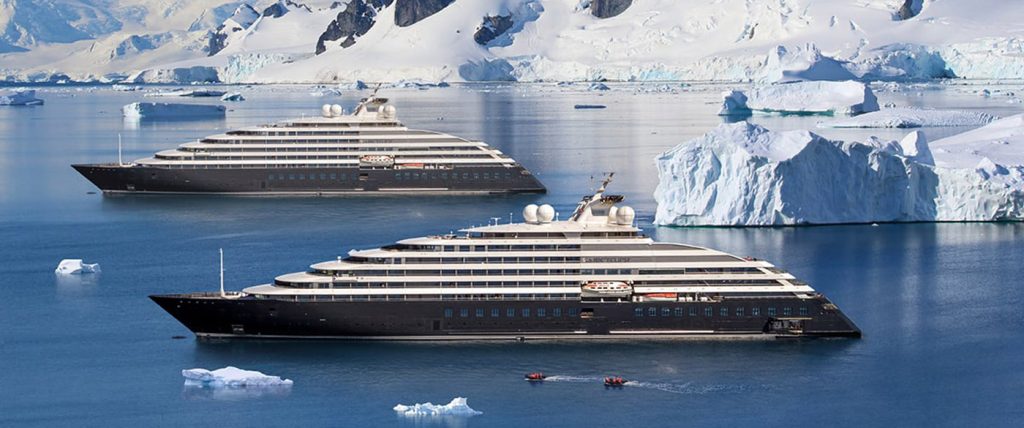
Best For: Ultra-luxury, helicopter excursions, and submarine dives.
The Scenic Eclipse sister ships have redefined what is possible in polar waters. Marketing themselves as “6-star” discovery yachts, they bring a level of sleek, urban sophistication to the bottom of the world. The design is reminiscent of a billionaire’s private mega-yacht rather than a traditional cruise ship.
The Balcony Suites
Every single cabin on the Scenic Eclipse is a suite with a private veranda. There are no inside cabins and no ocean-view-only rooms.
- Verandah Suites (32–40 m²): These are the entry-level suites, yet they rival the top tiers of other lines. They feature plush king-size beds, a separate lounge area, and floor-to-ceiling sliding glass doors leading to a private balcony. The bathrooms are spa-like, featuring light marble and premium amenities.
- Spa Suites (46–50 m²): Located on the higher decks, these suites include a double-size Phillipe Starck-designed spa bath overlooking the ocean, a steam shower, and complimentary laundry service. The balcony offers expanded space for photography.
- Owner’s Penthouse Suite (195 m²): The pinnacle of polar living. This massive residence features a large outdoor terrace with a private Jacuzzi, a dining table for eight, and a dedicated butler. It is located at the bow of the ship for the best views.
Onboard Experience
The dining on Scenic Eclipse is unmatched, with up to 10 dining experiences ranging from contemporary French fine dining at Lumière to the interactive Chef’s Table. The whiskey bar stocks over 110 varieties of whiskey.
Expedition Highlights
Scenic Eclipse carries two Airbus H130 helicopters and a custom-built submarine, the Scenic Neptune. This allows guests to see Antarctica from the air and below the surface, a rare combination that justifies the higher price point.
Source: Scenic Eclipse Official Site
2. Silversea Endeavour: The Ultra-Luxury Specialist
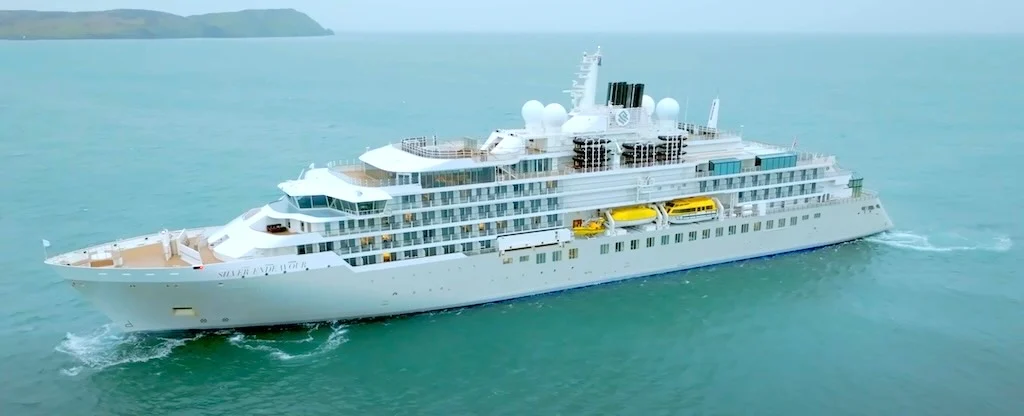
Best For: Door-to-door all-inclusive service and high staff-to-guest ratio.
Silversea has long been a leader in luxury travel, and the Silver Endeavour (formerly the Crystal Endeavor) is their crown jewel in the expedition market. Designed specifically for PC6 polar class specifications, it is one of the most advanced and capable luxury ships ever built.
The Balcony Suites
Silversea is famous for its “Butler for every suite” promise. The Silver Endeavour maintains this standard.
- Classic Veranda Suite (33 m²): The layout here is exceptionally wide, giving the room a spacious, apartment-like feel. The balcony is generous, and the walk-in closet is designed to handle bulky expedition gear. A drying closet is included for wet parkas.
- Silver Suite (50 m²): These suites are located on the upper decks and feature a larger living area that can be separated from the bedroom by heavy curtains. The balcony spans the entire width of the suite.
- Grand Suite (155 m²): Located at the bow, this suite features a massive wrap-around balcony that offers a 270-degree view. It is ideal for spotting whales before anyone else on the ship.
Onboard Experience
The Otium Spa is a highlight, offering treatments inspired by ancient Roman wellness rituals. Dining options include The Restaurant (main dining), Il Terrazzino (Italian), and La Dame (French fine dining). The “Antarctica Bridge” fly-cruise option allows guests to skip the Drake Passage by flying business class directly to King George Island to meet the ship.
Expedition Highlights
With a 1 to 1 crew-to-guest ratio, the service is intuitive. The expedition team is vast, often numbering over 20 experts, ensuring that Zodiac groups are small and landings are informative.
Source: Silversea Expeditions
3. Viking Octantis & Viking Polaris: The Thinking Person’s Expedition
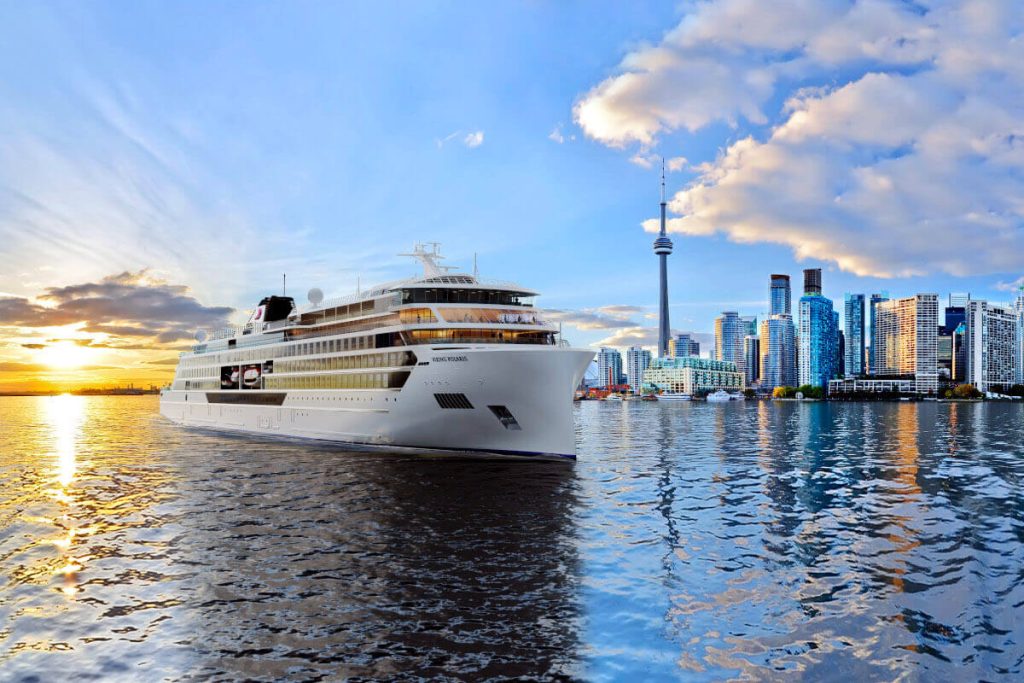
Best For: Scientific research integration and the “Nordic Balcony.”
Viking entered the expedition market recently and immediately disrupted it with a distinct Scandinavian design philosophy. The Octantis and Polaris are identical sister ships that focus heavily on enrichment and science.
The Nordic Balcony
Viking invented a new concept for these ships called the “Nordic Balcony.” Instead of a traditional step-out balcony, the entire outer wall of the cabin is floor-to-ceiling glass. The top half of the glass lowers electrically with the push of a button, turning your entire living area into an open-air viewing platform.
- Pros: This design maximizes interior square footage, making the room feel much larger. You can sit in your lounge chair inside the warm cabin while enjoying the fresh air and sounds of the Antarctic.
- Cons: You cannot physically “step out” onto a separate deck, but the connection to the outdoors is seamless.
Suite Options
- Nordic Balcony (20 m²): Efficient, beautifully designed with heated bathroom floors and a drying closet.
- Penthouse Junior Suite (37 m²): Offers a significantly larger living area and an expanded bathroom.
- Explorer Suite (54 m²): These corner suites offer wraparound views and a private garden area, a rarity on expedition ships.
Onboard Experience
Viking ships feature “The Aula,” a stunning panoramic auditorium inspired by the University of Oslo’s ceremonial hall. The Hangar is an enclosed in-ship marina that allows guests to board “Special Operations Boats” (SOBs) inside the ship, shielded from the wind and waves. This makes embarkation much safer and more comfortable for older guests.
Source: Viking Expeditions
4. Quark Ultramarine: The Adventure Beast
Best For: Active travelers, heli-skiing, and camping.
Quark Expeditions focuses purely on polar travel. The Ultramarine is their newest purpose-built vessel, designed to minimize the time it takes to get off the ship and into the action.
The Balcony Suites
- Balcony Suite (21 m²): Functional and comfortable, these suites feature a standard step-out balcony. The design is modern and ruggedly luxurious, with plenty of storage for cameras and gear.
- Terrace Suite (32 m²): These suites have wider balconies and a larger bathroom with a bathtub, which is a welcome luxury after a cold landing.
- Penthouse Suite (34 m²): Located on Deck 7, these offer premium views and enhanced amenities.
Onboard Experience
The ship has two “Ready Rooms” located next to the Zodiac loading bays. Each guest gets a personal locker to store their boots and life jacket, meaning you don’t have to carry wet gear back to your cabin. This is a massive quality-of-life improvement.
Expedition Highlights
The Ultramarine carries two twin-engine helicopters. This redundancy ensures that flightseeing operations can continue even if one aircraft requires maintenance. Quark offers unique adventure add-ons like alpine heli-trekking and overnight camping on the Antarctic ice sheet.
Source: Quark Expeditions
5. Seabourn Venture & Pursuit: Ultra-Luxury Meets Hard Expedition
Best For: Caviar service, submarine exploration, and intimate luxury.
Seabourn is synonymous with small-ship luxury. The Venture and Pursuit are their first dedicated expedition vessels, built to PC6 standards. They successfully transplant the Seabourn “club” atmosphere to the polar regions.
The Balcony Suites
All 132 suites on the Seabourn Venture feature a private veranda.
- Veranda Suite (33 m²): The standard suite is exceptionally well-appointed with a walk-in closet, a marble bathroom with a separate tub and shower, and a fully stocked bar.
- Panorama Veranda Suite (39 m²): These feature a semi-circular living area with floor-to-ceiling windows, offering wider views.
- Wintergarden Suite (97 m²): This is a two-story apartment at sea. It features a dining area, a large lower balcony, and a master bedroom on the upper level with expansive glass walls.
Onboard Experience
Seabourn is famous for its “Caviar on Ice” event, which they replicate in Antarctica (weather permitting) or on the pool deck. The ship features the Bow Lounge, which has touch screens displaying navigational charts and feeds from the ship’s exterior cameras.
Expedition Highlights
Like the Scenic Eclipse, Seabourn ships carry two custom-built submarines. They also feature a fleet of double sea kayaks for guided paddling excursions among the icebergs.
Source: Seabourn Expeditions
6. Aurora Expeditions’ Sylvia Earle: The Stable Choice
Best For: Guests prone to seasickness and active adventurers.
The Sylvia Earle (and her sister ship Greg Mortimer) features the revolutionary Ulstein X-BOW® design. This inverted bow allows the ship to pierce through waves rather than riding over them, significantly reducing the pitching motion in rough seas like the Drake Passage.
The Balcony Suites
- Balcony Stateroom (24 m²): Compact but efficiently designed. The balcony is small but sufficient for viewing.
- Junior Suite (39 m²): Features a separate lounge area, a larger bathroom, and a wider balcony.
- Captain’s Suite (44 m²): The largest on the ship, offering premium views and extra workspace for editing photos.
Onboard Experience
The vibe on Aurora is “relaxed Australian hospitality.” It is less formal than Silversea or Seabourn. The focus is heavily on education and activity. The ship features a large lecture theater and a well-stocked library.
Expedition Highlights
The X-BOW design also allows the ship to travel faster and more efficiently, potentially allowing for more time at landing sites. Aurora offers an extensive activity program, including polar snorkeling and diving for experienced divers.
Source: Aurora Expeditions
Detailed Cost Analysis and Booking Advice
Cruising to Antarctica is a significant financial investment. Understanding the cost structures can help you maximize value.
Price Ranges (Per Person, Double Occupancy)
- Entry-Level Luxury (e.g., Atlas Ocean Voyages, Aurora): $10,000 to $14,000
- Mid-Tier Luxury (e.g., Viking, Quark): $13,000 to $20,000
- Ultra-Luxury (e.g., Silversea, Scenic, Seabourn): $18,000 to $35,000+
What is Included?
When comparing prices, it is vital to check the inclusions.
- Silversea and Scenic: Typically include everything (international flights, transfers, pre-cruise hotel, all drinks, gratuities, and even butler service).
- Quark and Aurora: Often quote the cruise price separate from the “transfer package” (charter flight to Ushuaia + hotel), which can add $1,000+ to the bill.
- Alcohol: Most luxury lines include beer, wine, and spirits.
- Gear: Almost all expedition ships provide a high-quality parka (yours to keep) and loaner rubber boots for landings.
The “Fly the Drake” Option
For those terrified of the rough seas, several operators (Silversea, Antarctica21, Quark) offer “Fly-Cruise” itineraries. You fly from Punta Arenas, Chile, to King George Island in Antarctica, skipping the 2-day sea crossing.
- Premium Cost: Expect to pay 20% to 40% more for these itineraries due to the cost of the charter flights and the limited capacity.
- Time Saver: You save 4 days of travel time, making this ideal for busy executives.
The Daily Routine of a Luxury Expedition
Life on board follows the rhythm of the weather and wildlife. Here is what a typical day looks like on a luxury ship with balcony suites.
06:30
Wake up call from the Expedition Leader. They might announce, “Good morning, we have a pod of Orcas off the starboard bow.” You slide open your balcony door, step out in your robe, and watch the apex predators of the ocean glide through the glassy water.
07:30
Breakfast in the main restaurant. Buffet options include fresh fruits flown in from Chile, made-to-order omelets, and freshly baked pastries.
09:00
First Landing. You head to the mudroom to put on your boots and parka. You board a Zodiac (a sturdy inflatable boat) and cruise to a penguin colony. You spend two hours walking among thousands of Gentoo penguins, photographing them as they build nests and steal pebbles from neighbors.
12:30
Lunch back on board. The ship repositions to a new location while you eat.
14:30
Afternoon Activity. This might be a kayaking excursion through a maze of icebergs or a Zodiac cruise to view leopard seals resting on ice floes. If you are on the Scenic Eclipse or Seabourn Venture, this might be your slot for a submarine dive.
17:00
Tea Time. Warm up with specialty teas and scones in the observation lounge while the ship’s historian gives a lecture on Ernest Shackleton.
19:00
Recap and Briefing. The Expedition Leader discusses the day’s sightings and outlines the plan for tomorrow. This is usually accompanied by complimentary cocktails and hors d’oeuvres.
20:00
Dinner. A multi-course gourmet meal. You might enjoy Chilean Sea Bass or New Zealand Lamb, paired with fine wines.
22:00
Nightcap. You return to your suite. It is still light outside. You pour a glass of wine and sit on your balcony, watching the ship navigate through the Lemaire Channel, the sheer cliffs reflecting in the water.
Packing for Luxury and Performance
Even on a luxury ship, the environment is harsh. Your packing list must balance style with survival.
- Base Layers: Merino wool is essential. It wicks moisture and stays warm even when wet. Avoid cotton entirely.
- Mid Layers: A fleece jacket or a light down sweater.
- Outer Layer: The ship usually provides the heavy parka. You will need waterproof pants (essential for Zodiac rides where spray is common).
- Footwear: The ship provides rubber boots for landings. Bring comfortable shoes for the ship (sneakers or loafers) and perhaps dress shoes if you plan to dine at the formal venues, though “Expedition Casual” is the standard dress code.
- Photography: Bring a long lens (at least 300mm) for wildlife. A polarizing filter is crucial to manage the glare from the ice.
Health and Safety Considerations
Traveling to Antarctica requires awareness of isolation.
- Medical Facilities: All expedition ships have a doctor and a small infirmary, but capabilities are limited. Major emergencies require medical evacuation, which is weather-dependent and extremely expensive.
- Insurance: Comprehensive travel insurance with at least $250,000 in emergency evacuation coverage is mandatory for almost all operators. Ensure your policy covers “polar regions.”
- Motion Sickness: The Drake Passage can be rough. Modern ships have stabilizers, but it is wise to bring medication (Scopolamine patches or Dramamine) as a precaution.
Conclusion: The Investment in a Lifetime Memory
Choosing the right ship for your Antarctic expedition changes the narrative of your journey. A balcony suite on a vessel like the Scenic Eclipse, Viking Octantis, or Silversea Endeavour ensures that you are not just a spectator, but a participant. You have the privacy to process the overwhelming beauty of the continent and the luxury to recover in comfort after a day of adventure.
As the 2025/2026 season progresses, availability for prime suites is tightening. If you are considering a voyage for the 2026/2027 season, early booking is highly recommended to secure specific cabin categories, particularly the Owner’s Suites and large veranda options.
Antarctica is not just a destination. It is a feeling. It is the silence of the ice, the roar of a calving glacier, and the gaze of a penguin. Seeing it from your own private balcony is an experience that justifies every cent of the investment.
Frequently Asked Questions
What is the best month to visit Antarctica?
December and January are the peak summer months. Temperatures are warmest, penguin chicks are hatching, and days are longest (near 24 hours of light). February and March are best for whale watching and seeing playful penguin chicks in the water. November is best for pristine white landscapes and seeing huge icebergs, though it is colder.
Do I really need a balcony in Antarctica?
While you can see the views from public decks, a balcony offers privacy and immediate access. It is particularly valuable for photographers who want to capture fleeting moments without racing to the top deck. It also allows you to regulate your room temperature with fresh air.
How far in advance should I book?
For luxury suites (Owner’s, Penthouse, Grand), you should book 12 to 18 months in advance. These top-tier cabins are few in number and sell out first. Last-minute deals are sometimes available for lower categories 3–4 months prior to departure, but choice will be limited.
Is the Drake Passage dangerous?
The “Drake Shake” is famous for rough seas, but modern luxury expedition ships are built with advanced stabilizers (and X-BOW designs on some) that dampen the motion significantly. Safety is the top priority for captains. If the weather is too severe, the ship will alter course or wait for a window. For those prone to severe motion sickness, the “Fly-Cruise” option is the best alternative.
Are these cruises suitable for children?
Most expedition lines have a minimum age requirement (usually 6, 8, or 10 years old). The environment is harsh, and there are no “kids clubs” on most expedition ships. However, strictly for older children and teens interested in science and nature, it is an incredible classroom. Seabourn and Aurora are generally more family-friendly than Silversea or Scenic.